
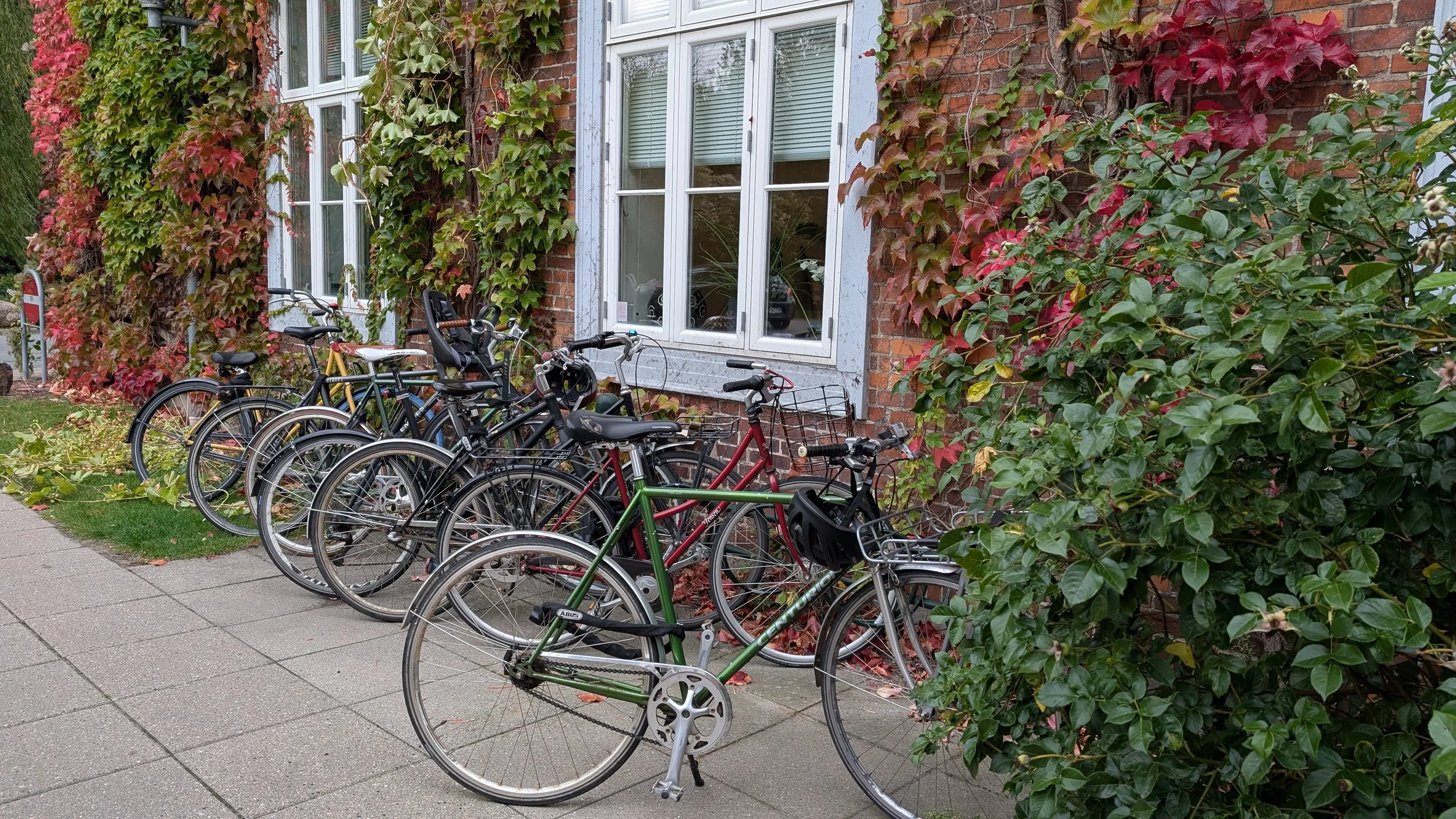
A glimpse of the FEE Head Office parking area.
The Foundation for Environmental Education (FEE) has made it its mission to empower people across the globe to create a more sustainable world. With its strategic plan GAIA 20:30 and the help of its global network of partner organisations, FEE commits to addressing the urgent threats of climate change, biodiversity loss, and pollution. For FEE, this entails taking responsibility for the environmental footprint of its own operations and “walking the talk” on the values it holds, the principles it teaches, and the standards it asks others to meet. At the FEE Head Office in Copenhagen, the team is working to translate these commitments into everyday organisational practices. This is an ongoing process that involves reviewing existing practices, identifying areas for improvement, and developing more systematic ways to measure and reduce our environmental impact.
A culture of continuous improvement
From the digital tools that power FEE’s programmes to the everyday choices made in the office, the FEE team aims to put the sustainability principles FEE promotes into practice. To work towards this, a Sustainability Working Group has been established which has developed a Sustainability Policy for the Head Office. This policy is reviewed regularly and is supported by a Sustainability Action Plan that defines specific actions, responsibilities, timelines and indicators. This way, everyone gets involved and we keep ourselves accountable. Of course, there are always areas where we still need to be doing more or where we have not found the right solutions yet. The Action Plan is meant to identify these areas and put them on the agenda. The sustainability topics the Working Group is tackling range from energy use to consumption, travel, and collaboration.
Using resources responsibly
FEE collaborates with the Danish Outdoor Council, with which the Head Office shares a building, to address energy consumption on the building-level. The office building’s electricity is supplied through 100% wind energy, and the team aims to cut down on energy use wherever possible. Devices with high energy-saving rankings and signs near light switches reminding staff to turn off lights when not needed are simple ways of keeping everyday energy consumption in check. The Sustainability Working Group is currently working to improve environmental data collection regarding energy, water, and waste to be able to better understand and monitor the office’s resource use.
Various bins in the kitchen help with the separation of waste, but waste management already starts with thinking about consumption. When a purchase for the office is necessary, preference is given to sustainably produced, reusable and, where possible, second-hand goods. For instance, this means using reusable kitchen cloths rather than single-use towels. Buying in bulk where possible can reduce unnecessary packaging waste. To ensure a consistent organisational approach to sustainable purchasing, a Sustainable Purchasing Policy is being developed. This is an example where the FEE Head Office can build on best practice examples from its sustainable tourism programmes and so learn from the extensive experience of its network.
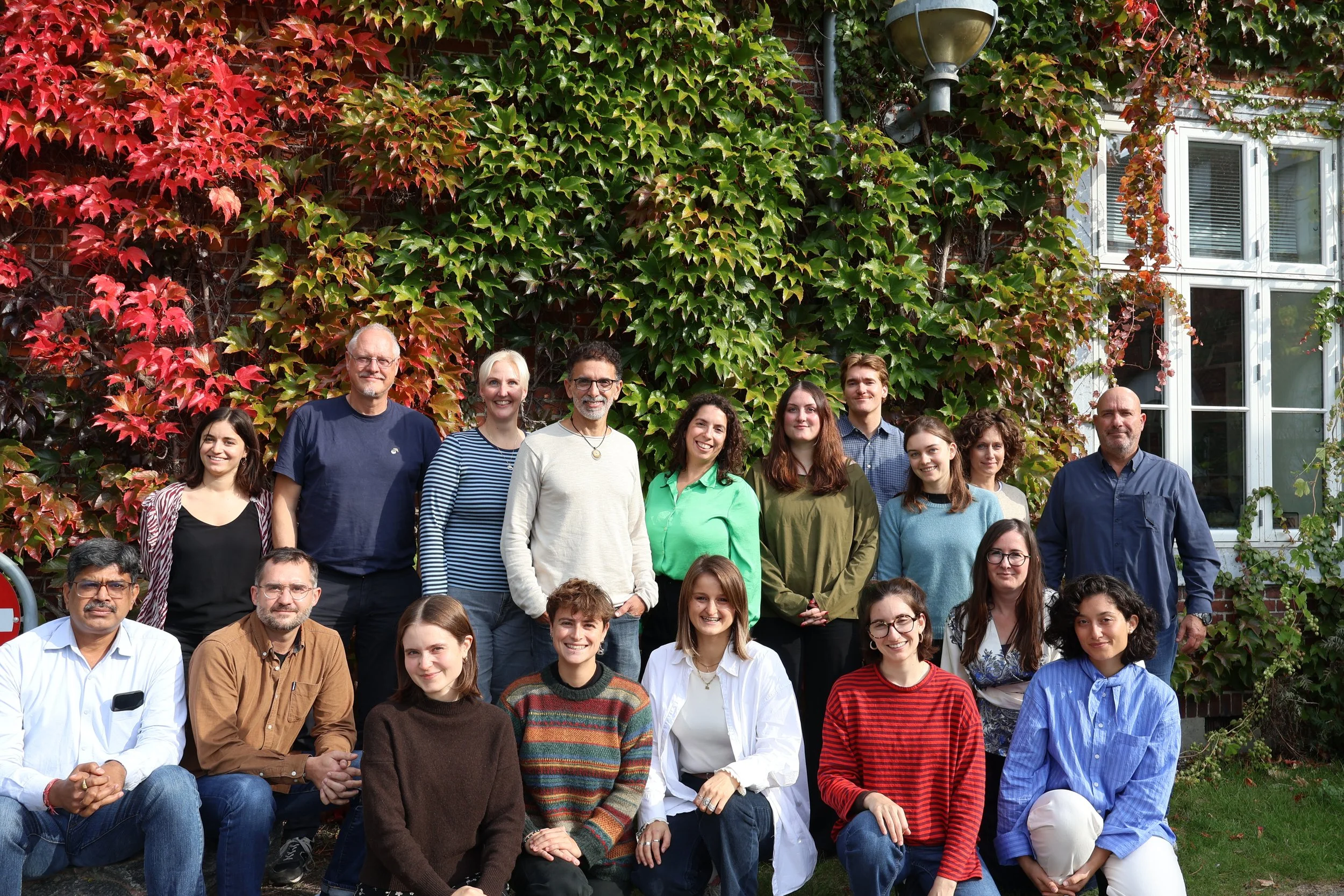
Part of the FEE Head Office team.
Reducing the digital footprint
Behind every certification, newsletter, and campaign is a website and a set of digital tools that also carry an environmental cost. Responsible digital practices and the reduction of digital pollution are important parts of the FEE Sustainability Policy, and steps are already being taken towards those goals. Working with the technical partner Phases, the Green Key team has recently improved the sustainability performance of its digital platform, achieving an A+ carbon rating alongside a 100% score in accessibility. Because understanding carbon impact measurements like this one can be complex, the Sustainability Working Group is planning to strengthen carbon literacy across FEE. Education is at the core of FEE's approach to sustainability after all!
A lighter way of working
Running six environmental education programmes is hard work but powering that work does not need to come with a large carbon footprint. At meetings and events organised by the FEE Head Office you will find delicious vegetarian and vegan food, but no single-serve packaged products. The coffee and tea options at the office are from eco-labelled brands, including ØNSK coffee, which provides transparent data about the carbon footprint of its coffees, allowing FEE to make better-informed purchasing choices.
The FEE Head Office team is often on the move, be it on the commute to the office or on an international trip to a conference. FEE recognises remote and hybrid working arrangements as an important structural measure to reduce travel-related emissions. Of those team members who regularly come into the office, about 60% usually choose to go by bike and about 30% usually use public transport for their commute. An office bike is available to staff and free to use for shorter trips. Because FEE works with a global network of partner organisations, members of the Head Office need to network internationally to strengthen collaboration and represent FEE’s mission at summits and conferences. FEE’s approach to minimising the footprint of these events is to avoid unnecessary travel, for example by organising virtual or hybrid meetings and by combining several activities within the same trip, and to choose lower-impact transport options where possible. Annual travel-related carbon emissions are monitored and measured against a reduction target. FEE is working on establishing a partnership with Life Terra, one of Europe’s leading climate action initiatives, to compensate for travel-related emissions through independently verified Nature-Positive carbon removal credits from European restoration projects.
Collaboration and responsibility
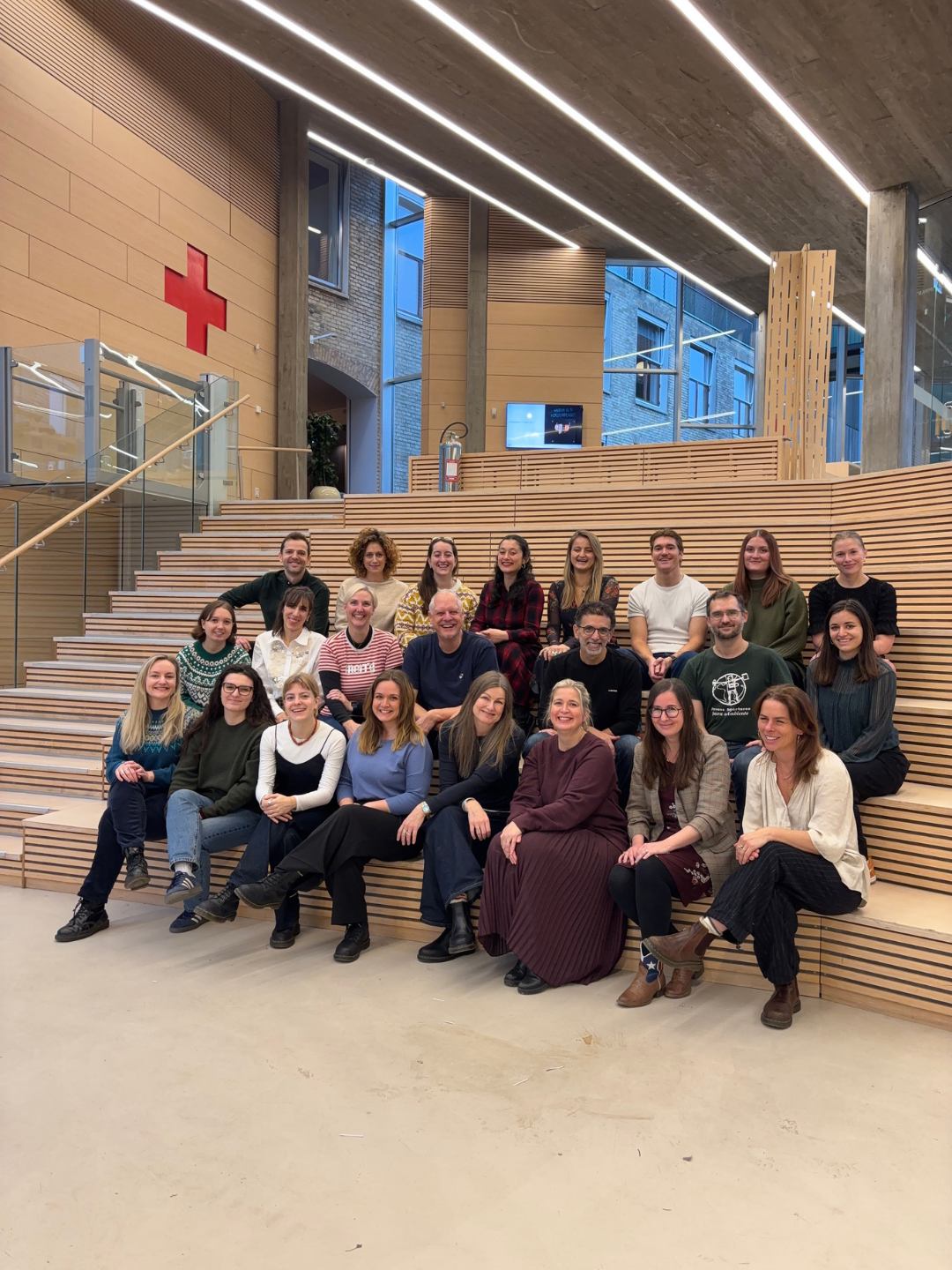
FEE Head Office staff volunteering with the Red Cross.
For FEE, sustainability also means looking after local communities, respecting cultural differences, and upholding principles of equity, inclusion and environmental justice. These principles inform how we work with others and how we seek to make a positive impact through our programmes and partnerships. FEE's Equality, Diversity and Inclusion Policy acknowledges that a respectful, diverse, and inclusive working environment is an integral part of being a sustainable organisation. FEE also supports other social and environmental charities in their work and always seeks opportunities for cooperation and collaboration. For instance, each year around Christmas, members of the team take part in volunteering with the Red Cross, reinforcing the idea that sustainability is not only environmental, but social too.
Organisational sustainability is an ongoing team effort. The FEE Head Office team encompasses a variety of cultural and professional backgrounds and greatly benefits from this diversity. A cross-section of this multicultural team forms the Sustainability Working Group, bringing different perspectives from across FEE and helping turn policy into practical action. As the Head Office of a global network, the team aims to lead by example but also works with specific challenges and opportunities that show that there is no one-size-fits-all approach to sustainable development. What are those challenges and opportunities in your organisation? How can we keep on challenging ourselves and each other to take on environmental and social responsibility?