Various of our FEE Member organisations participated in COP30 in Belem, Amazonia, Brasil. Read some of their highlights and takeaways below
Instituto Ambientes em Rede highlights education, responsible tourism and coastal conservation at COP30
The organisation represented FEE in panels on sustainable management, climate, education and solutions connecting forests, cities and oceans at the UN Climate Conference in Belém.
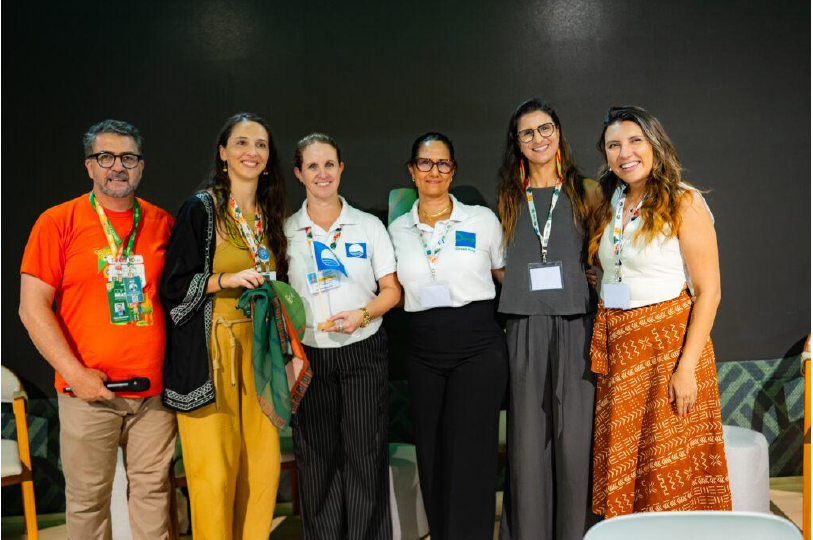
IAR represented FEE at COP30, strengthening connections that advance education and responsible tourism | Photo: Henrique Huff/MTur.
The Instituto Ambientes em Rede (IAR) took part in several moments of COP30, held in Belém, Pará, the first UN Climate Conference hosted in the Amazon. Representing the Foundation for Environmental Education (FEE), IAR brought its work in environmental education, responsible tourism and coastal conservation to the forefront of an event that brought together governments, organisations, specialists and communities to discuss climate justice, ecological transition, education for sustainable development and solutions connecting forests, cities and oceans.
Participation began on Friday, 14 November, with a panel held in the Blue Zone, a restricted-access area of COP30 where official negotiations between countries take place, alongside strategic debates led by delegations and international organisations. Organised by the Terre Policy Center, a non-governmental organisation from India, the panel addressed the transition from forest to ocean and global initiatives to conserve these ecosystems.
In this space, IAR, invited to represent FEE, presented the Blue Flag Programme from a historical and methodological perspective, highlighting its main results and the best practices accumulated over the years.
The discussion featured Marinez Scherer, Special Envoy for Oceans at COP30, who presented a global overview of the award and recalled her role in implementing the programme in Brazil. Leana Bernardi, Technical Director of the Instituto Ambientes em Rede and National Coordinator of the Blue Flag Programme in Brazil, then highlighted the evolution, challenges and advances of the programme in the country, reinforcing the importance of qualified management and environmental education in strengthening awarded beaches, marinas and tourist boats.
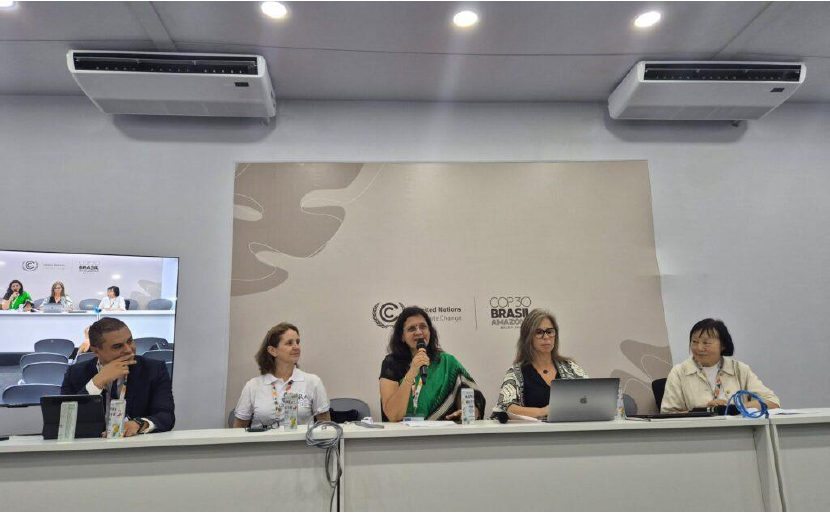
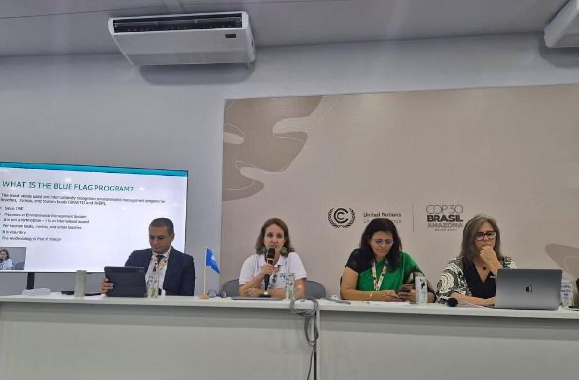
IAR represented FEE at COP30, strengthening connections that advance education and responsible tourism | Photo: Press Release.
The presence of international representatives broadened the dialogue and reinforced cooperation between countries in the sustainable management of coastal ecosystems. Among them was Ayman Cherkaoui, Director of the Hassan II International Centre for Environmental Training and Coordinator of the Mohammed VI Prize for the Climate and Sustainable Development, who shared Morocco’s perspective and promoted the exchange of experiences between different regions.
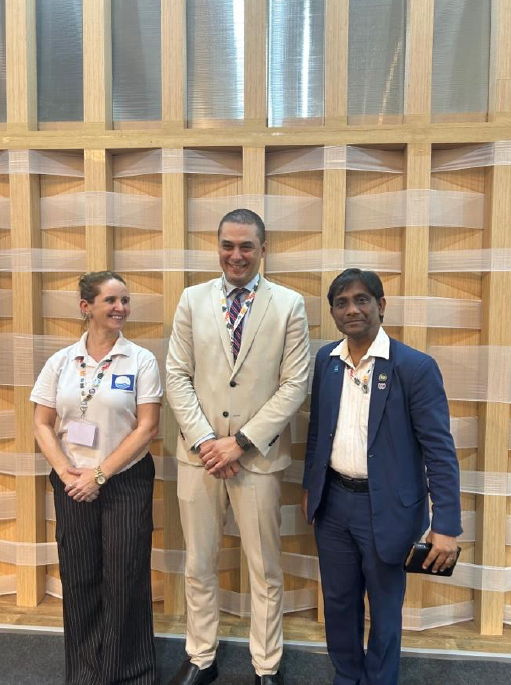
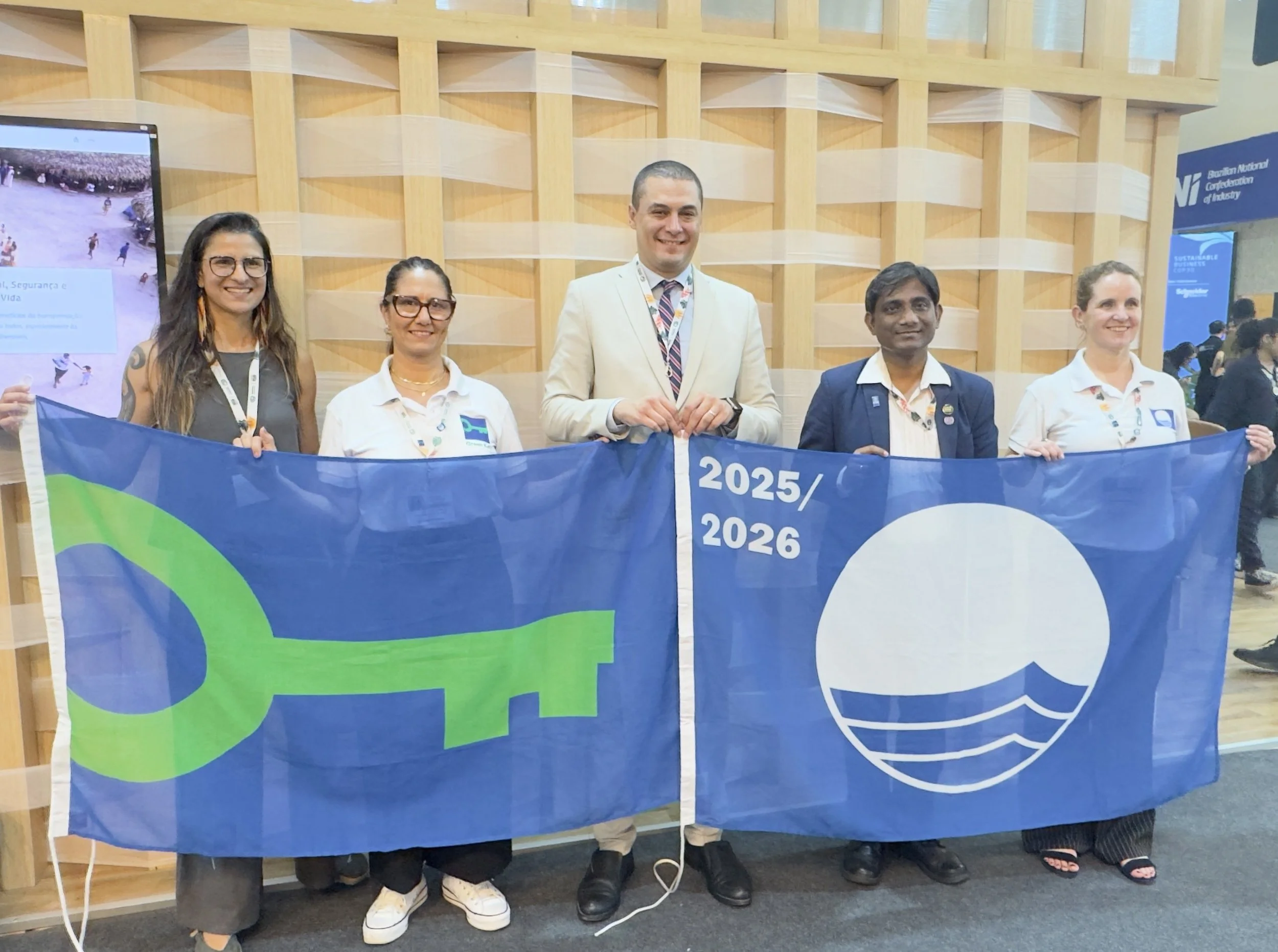
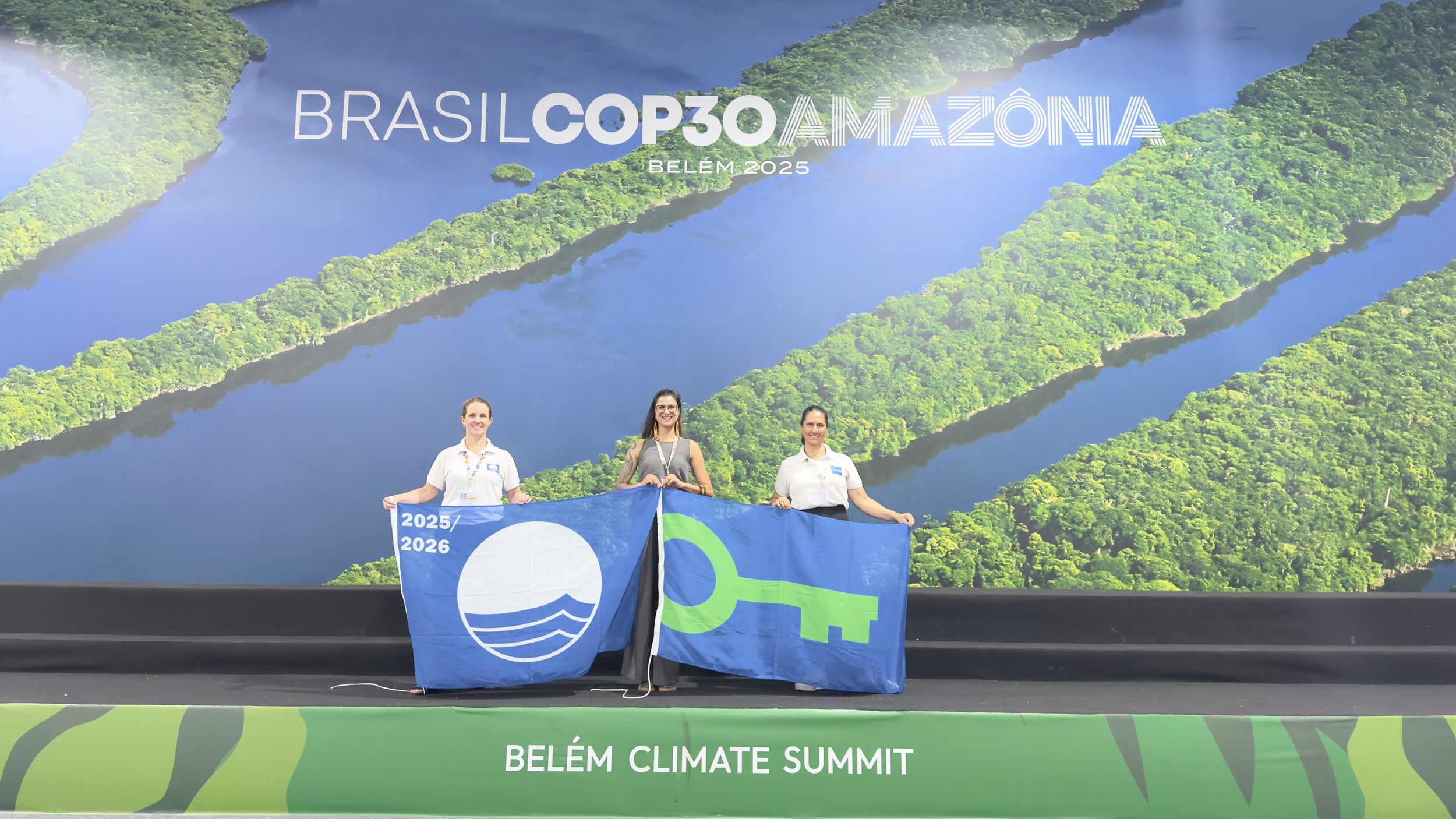
On Saturday, 15 November, IAR expanded its participation by joining two panels in the Green Zone, an area open to the public and dedicated to sharing social and environmental solutions and experiences. In the afternoon, the organisation took part in the panel Responsible Tourism: from the Forest to the Ocean, promoted by the Brazilian Ministry of Tourism. The discussion highlighted how best practices, education and management can transform tourism into a positive force for people and territories.
Leana Bernardi presented how qualified management of certified beaches and marinas contributes to improved water quality and stronger environmental governance. Fernanda Melo, National Coordinator of the Green Key Programme in Brazil, shared examples of actions tourism enterprises can adopt to reduce emissions and operate in line with international sustainability criteria. The session was moderated by Aline Tiagor, who explained the difference between ecotourism and Community-Based Tourism (CBT) and reinforced the importance of responsible social practices and the development of a positive handprint, meaning lasting contributions that go beyond impact mitigation.
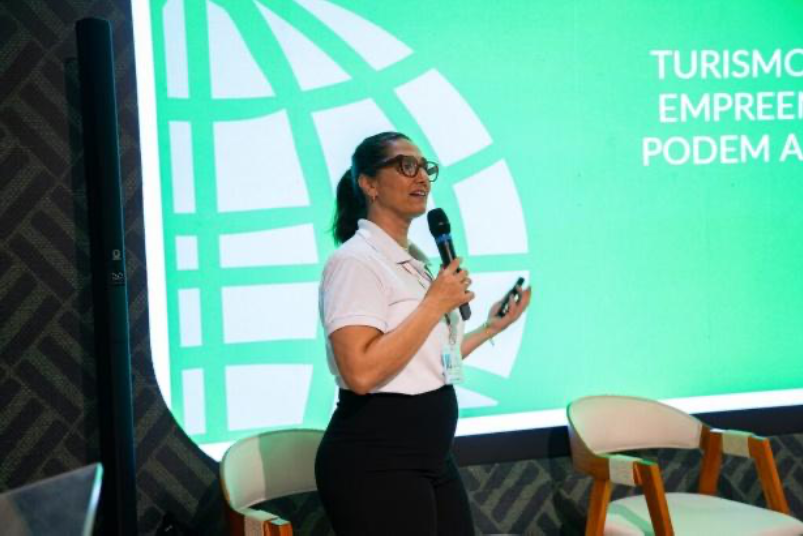
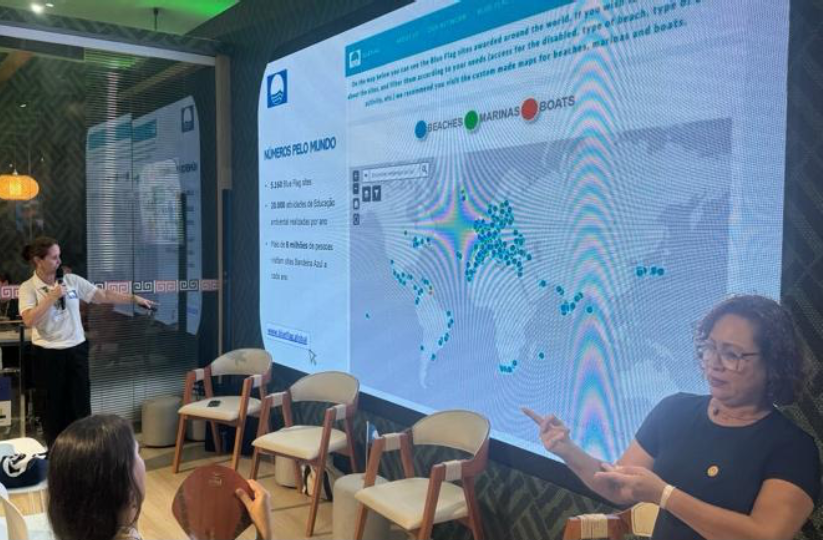
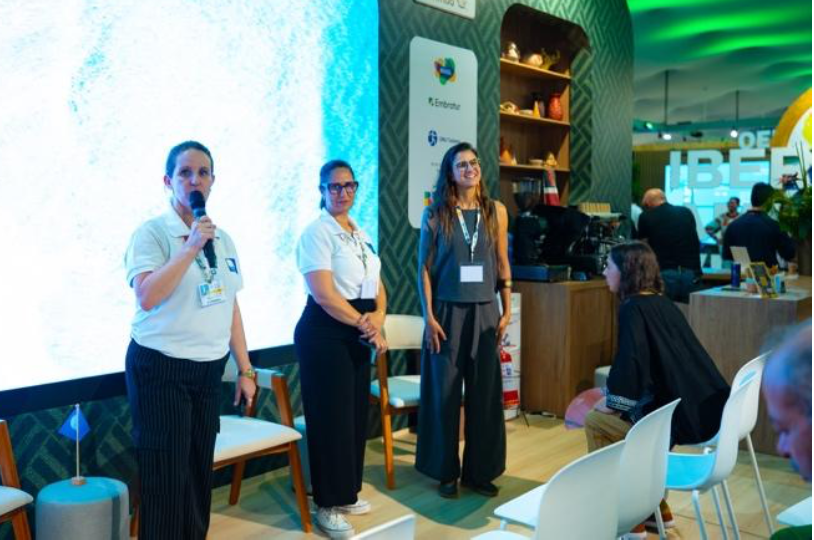

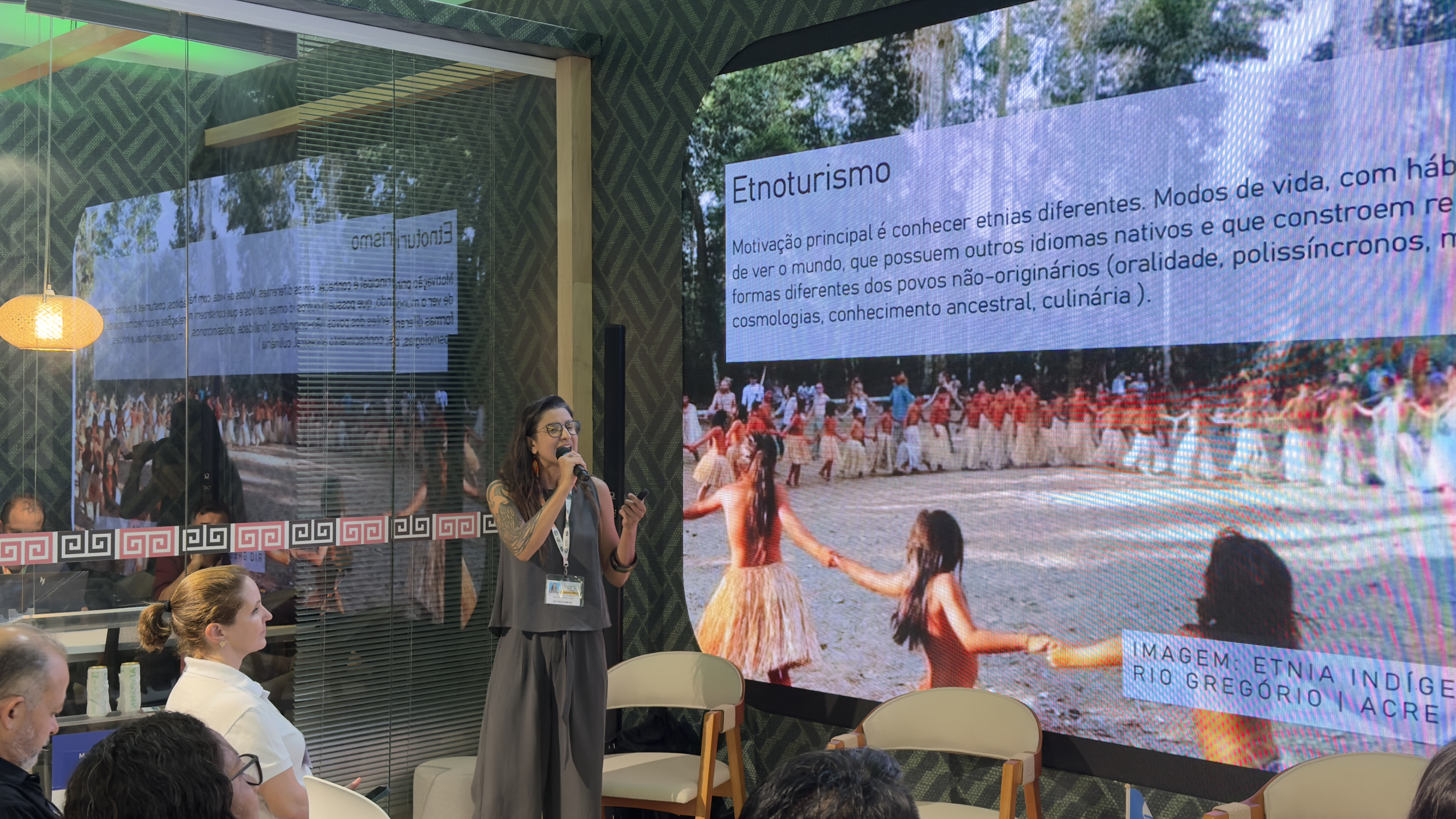
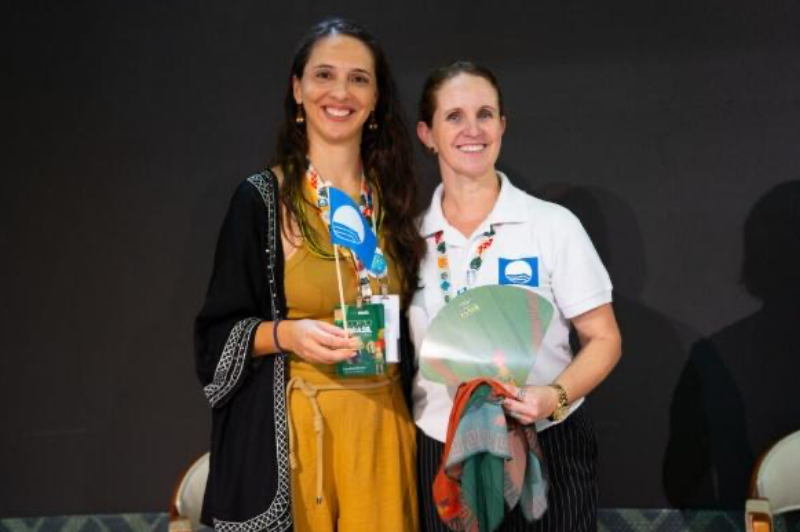
At the Ministry of Tourism panel, IAR contributed to a rich exchange on how tourism can generate positive impacts in communities and territories | Photo: Henrique Huff/MTur.
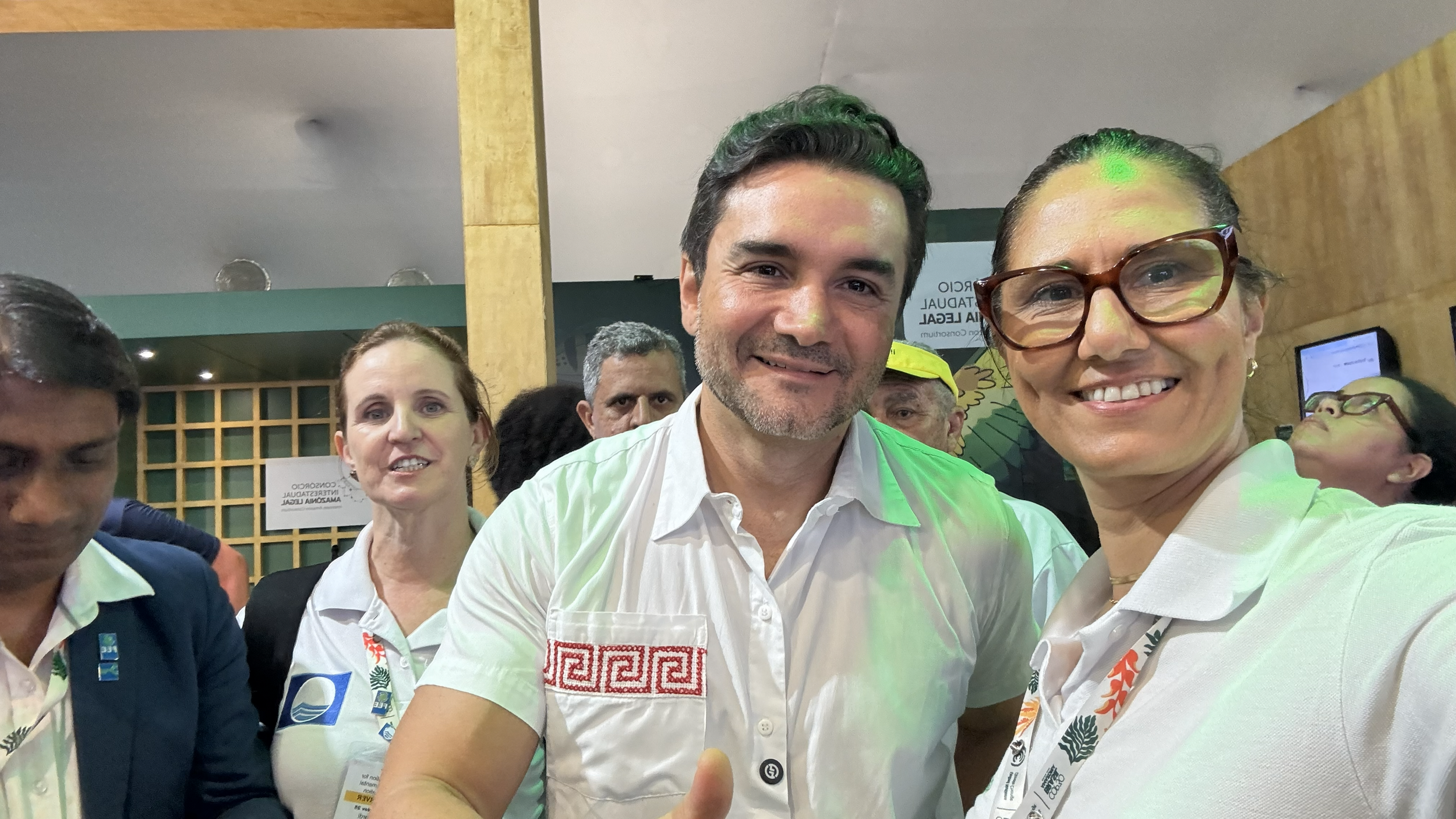
A quick chat with the Brazilian Minister of Tourism, Mr. Celso Sabino.
Later on Saturday, IAR and FEE participated in the panel Relevant Education: building a sustainable education proposal for and with everyone, promoted by the IDB Group at the Emilio Goeldi Museum, one of COP30’s special sessions held in historical buildings across Belém. The discussion brought together specialists and public managers, including the national coordinators of the Eco-Schools Programme in Brazil and Bangladesh, Aline Tiagor and Bidhan Chandra Pal, to debate pathways for education capable of addressing inequalities and current climate challenges.
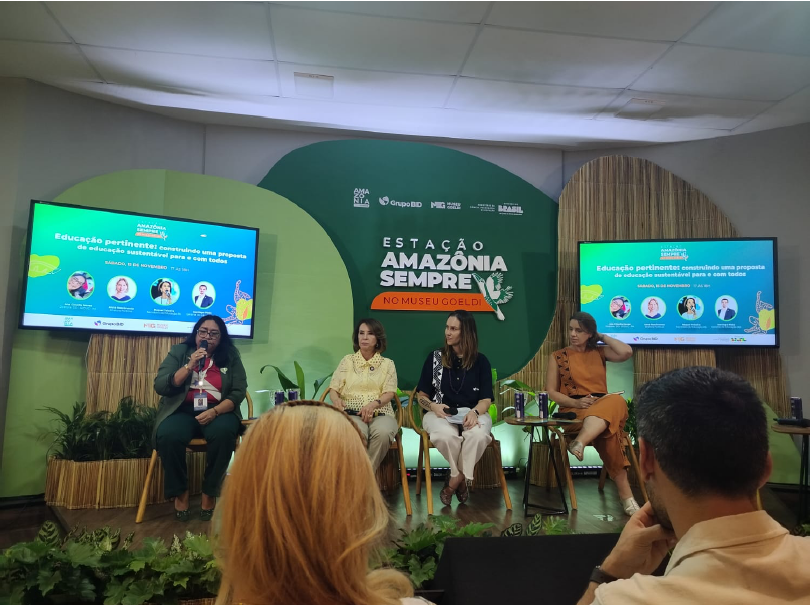
Ana Cláudia Neves, Director of Diversity and Inclusion at the Pará State Department of Education, highlighted the challenges of promoting sustainable education in the Brazilian Amazon, ranging from logistical barriers to regional inequalities. Raquel Teixeira, Secretary of Education of Rio Grande do Sul, presented the state’s climate resilience planning and actions following the 2024 floods, which severely affected schools and communities.
Following their presentations, Aline and Bidhan spoke with the State Secretary about how the Eco-Schools Programme, aligned with project-based learning, enables each school to develop actions connected to its own reality. This approach strengthens the autonomy of school communities and supports students in becoming critical, resilient and active participants in their communities.
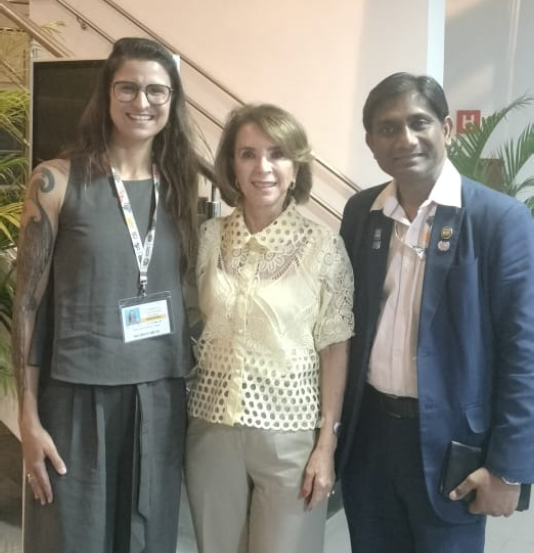
Meeting of Eco-Schools National Coordinators Aline Tiagor (Brazil) and Bidhan Chandra Pal (Bangladesh) with the Secretary of Education of Rio Grande do Sul, Ms Raquel Teixeira.
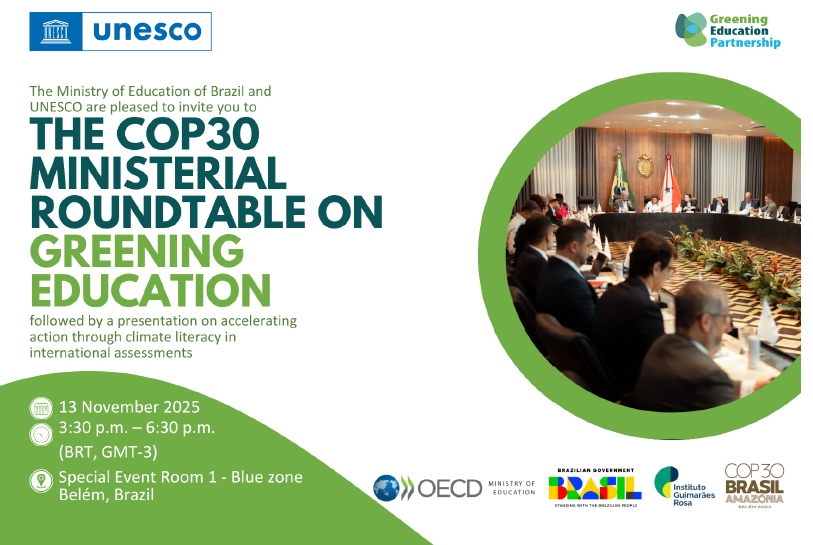
Bidhan Chandra Pal also represented FEE at The COP30 Ministerial Roundtable on Greening Education in the Blue Zone on 13 November, when the Brazilian Ministry of Education brought together national and international institutions. Among the speakers was Katerina Ananiadou, UNESCO Programme Specialist leading global research and capacity-building in Technical and Vocational Education and Training, who emphasised the need for investment in teachers so they are climate-ready to lead greening education efforts.
IAR’s presence at COP30 reinforced the organisation’s commitment to promoting environmental education, improving public and private management and strengthening initiatives that connect forest conservation with the ocean. By representing FEE across multiple spaces throughout the conference, the institute helped to expand debates, share experiences and collectively build more responsible, inclusive and future-oriented pathways for the planet.